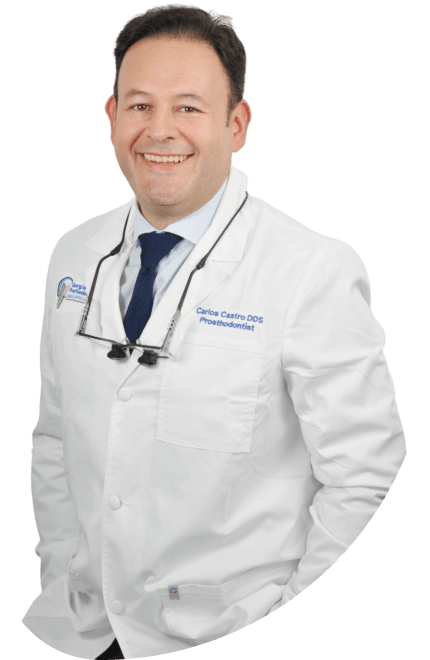
Dentists specialized in dental implants, treatment of complex dental cases and full mouth reconstruction, with advanced, personalized, compassionate care. Led by Dr. Carlos Castro, Board-Certified Prosthodontist in Atlanta, our talented team is committed to provide first-class quality care for major reconstructive challenges.
Having implants and teeth on the back, is amazing...
This is perfection. I’m very pleased. Beyond pleased. Very grateful.
Camelia
If you get implants, it changes your life. You can eat again. My confidence is back
My outlook on life is better. I trust Dr. Castro and his office more than any other office I’ve ever been to by a hundred.
Glen
I just felt very comfortable here. Other people have told me that it looks natural. I forget that I've had the procedure
I would recommend it to anyone concerned about their teeth. I’m very happy with them
Doug
It was embarrassing not smiling, but now I'm free. I can chew, eat, and smile—it's wonderful
People tell me I look different, and my kids say, ‘Mom, you’re smiling like you used to.’ That means a lot to me.
Kathy
I was terrified of dentists and thought I'd end up with dentures. Now my teeth are great
People have no idea I have implants — they look natural. This has been life-changing. I love my smile.
Pawel
Coming here was the best decision I made. I love my smile now
My sister tells me I smile too much, but I don’t care. I am thankful every day for Dr. Castro and his phenomenal staff.
Marsha
I had pain from poor dental work before, but Dr. Castro did it the best way
The staff is efficient and friendly. I love coming here because I know they care about me and my teeth
George
For the past eight years, my care has been first class
The staff is engaged and committed to providing an experience. Dr. Castro explains things well and makes you feel good overall. This practice is at the top of all my health care experiences.
Michael
"We change more than smiles, we change lives"
Experience the care and expertise that will make you feel like family, where every smile is crafted with precision and heart.
Correcting and improving the outcomes of prior dental treatments that may not have been successful or require revision.
Traumatic Injuries
Rebuilding and restoring teeth, gums, and jaw structures damaged by accidents or trauma.
Tooth Wear and Erosion
Restoring teeth damaged by:
Bruxism (teeth grinding)
Acid erosion from diet or medical conditions
Aging or wear-and-tear over time
Congenital or Developmental Defects
Treatment of conditions such as cleft palate, ectodermal dysplasia, amelogenesis imperfecta or other dental and facial abnormalities.
Oral Cancer Restoration
Designing and fabricating prostheses for patients who have lost oral or facial structures due to cancer surgery or trauma.
Complex Dental Problems
Addressing structural, mechanical, or functional issues, such as:
Bite misalignment (malocclusion)
Severe enamel wear
Failed dental restorations
Cosmetic Concerns
Enhancing the appearance of teeth and smile with:
Veneers
Crowns
Bonding
Teeth whitening
Smile makeovers
Full-Mouth Reconstruction
Treatment for patients with severe tooth wear, decay, trauma, or congenital conditions that require complete oral rehabilitation.
Missing Teeth
Replacement of single, multiple, or all missing teeth using:
Dental implants
Bridges
Dentures (partial or complete)
Implant-supported dentures
ENT Specialists / Maxillofacial Surgeons / Oncologists
Why? For patients who have experienced facial trauma, oral cancer, or need complex reconstructive surgery, these medical specialists coordinate with prosthodontists to plan and execute full-mouth or facial rehabilitation. This might involve implant-retained prosthetics or specialized maxillofacial prostheses.
Speech-Language Pathologists
Why? In cases involving reconstructive jaw surgery or significant changes to the oral structures (e.g., after trauma or cancer treatment), prosthodontists and speech-language pathologists may work together to improve or restore speech function.
Why? Dental technicians fabricate the actual crowns, bridges, dentures, veneers, and implant restorations that prosthodontists design. Close collaboration ensures that the prosthesis (e.g., denture or crown) fits accurately, functions well, and looks natural.
Dental Hygienists
Why? Ongoing maintenance of crowns, implants, and dentures is critical. Dental hygienists provide professional cleanings and patient education to ensure restorations remain in good condition and minimize the risk of gum disease or decay around restorations.
Orthodontists (Alignment Specialists)
Why? Sometimes, proper alignment of teeth and jaws is necessary before placing prosthetic appliances like crowns, bridges, or dentures. By moving teeth into more ideal positions, an orthodontist can help create a better foundation for prosthodontic work.
Endodontists (Root Canal Specialists)
Why? Before placing new restorations (like crowns), teeth may need root canal treatment if there is infection or pulp damage. Prosthodontists collaborate with endodontists to ensure the underlying tooth is healthy enough to support a restoration.
Periodontists (Gum Specialists)
Why? Healthy gums and bone structure are crucial for successful prosthodontic work, such as crowns, bridges, and implants. Periodontists help manage gum disease, perform procedures like gum grafts, and maintain the periodontal health that underpins stable restorations.
Oral Surgeons
Why? If tooth extractions, bone grafts, or placement of dental implants are needed, an oral surgeon is often called in. Prosthodontists and oral surgeons coordinate the plan for implant surgery and final tooth restoration, ensuring the surgical and restorative aspects fit together seamlessly.
General Dentists
Why? General dentists often identify a patient’s need for prosthodontic treatment (e.g., for missing or severely damaged teeth) and will refer patients to prosthodontists for more specialized care. After the prosthodontic phase of treatment, the patient may return to the general dentist for routine check-ups and maintenance.
TMJ
Temporomandibular joint disorders that affect jaw function. This treatment focuses on restoring alignment and relieving pain